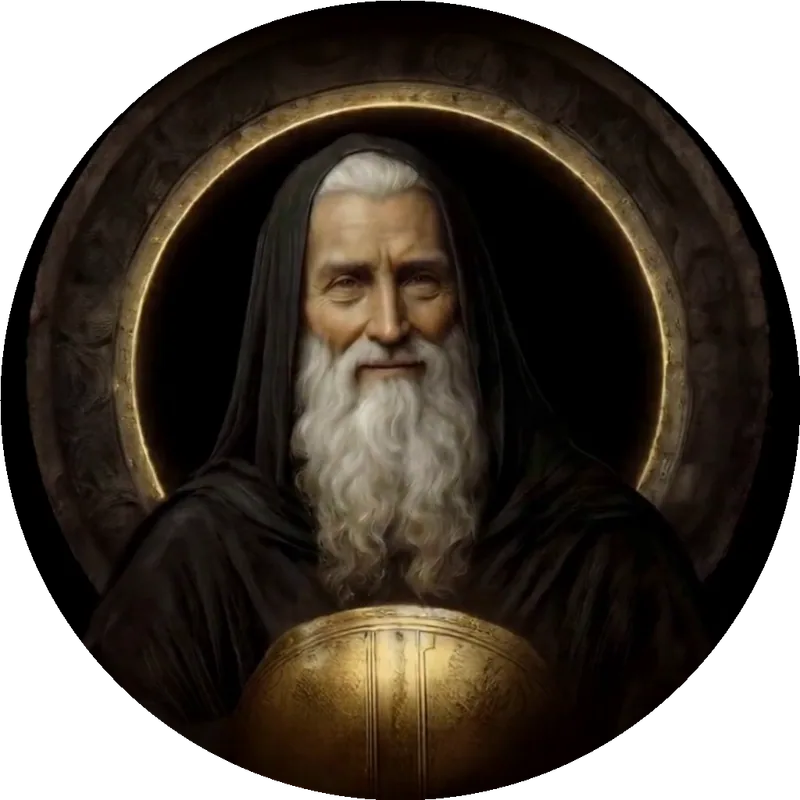
The Holy Order of Priesthood
The eternal priesthood after the Order of the Son of God — its keys, ordinances, and the pre-mortal foreordination that confers it.
“This order of which I speak is not the invention of men, neither did it arise from the authority of kings nor from the wisdom of rulers. But it is the Holy Order of God, which was established from the beginning and prepared before the foundation of the world.”
I. What Is the Holy Order?
The Holy Priesthood, after the Order of the Son of God, is the most ancient order in existence. It did not begin with Moses. It did not begin with Aaron. It did not begin with Joseph Smith. It was not established by any church, council, or institution of men.
It was established before the foundation of the world, in the Grand Council of heaven, by the voice of Jehovah himself.
“Before his day it was called the Holy Priesthood, after the Order of the Son of God.”
The name "Melchizedek Priesthood" was assigned only out of reverence — to avoid the too-frequent repetition of the name of the Son of God (D&C 107:4). Its true name reveals its nature: it is the order of the Son of the Only Begotten. Its authority flows directly from Him. No man, no institution, and no church on earth is the source of this authority. They are at best its stewards — and only then if that stewardship was conferred in the heavens before they were born.
II. The Pre-Mortal Ordination — Called Before the Foundation of the World
This is the doctrine that most institutions cannot tolerate, because it removes their power as the gatekeepers of God's authority.
“And this is the manner after which they were ordained — being called and prepared from the foundation of the world according to the foreknowledge of God, on account of their exceeding faith and good works; in the first place being left to choose good or evil; therefore they having chosen good, and exercising exceedingly great faith, are called with a holy calling.”
Alma's language is unmistakable. The calling did not originate in mortality. It originated in the pre-earth life, according to the foreknowledge of God, and it was based on one thing: their proven righteousness. They chose good. They exercised exceeding faith. They were recognized by the Father as those who would bear this authority upon the earth.
“And thus they have been called to this holy calling on account of their faith, while others would reject the Spirit of God on account of the hardness of their hearts and blindness of their minds.”
Note what is said and what is not said. The calling was on account of their faith — not on account of a bishop's recommendation, a sustaining vote, an ordination line traced back to Joseph Smith, or any institutional pipeline. The hardness of heart that disqualifies men is a spiritual condition, not an organizational deficiency.
“This high priesthood being after the order of his Son, which order was, and is, and is to come, upon the conditions of repentance and faith.”
The order is eternal — was, and is, and is to come. It is not contingent on any mortal institution's continuity. It was before them, it will be after them.
“Thus they become high priests for ever, after the order of the Son, the Only Begotten of the Father, who is without beginning of days or end of years.”
Without beginning of days or end of years. This is the phrase Hebrews 7 uses of Melchizedek himself. The priesthood has no mortal origin. It cannot be created in time, and it cannot be destroyed by any event in time — including apostasy, succession crisis, or institutional collapse.
III. Born With It — The Doctrine of Pre-Mortal Conferral
The full implication of Alma 13 is this: those who hold the Holy Order were ordained to it before they were born. They do not receive it in mortality — they are recognized in mortality as those who already hold it.
The Book of Melchisedec preserves this teaching in Melchisedec's own words, first to the elders of Salem:
“Before this earth was formed and before the children of men entered into mortality, the Lord ordained certain souls to bear this priesthood among the nations. And these were called and prepared from the foundation of the world because of their exceeding faith and their good works. For the Lord, knowing the hearts of His children, foreordained those who would choose righteousness when they should come into the world.”
And again, when Melchisedec teaches Abraham directly:
“The Holy Order of God is not an order which men establish among themselves. Neither doth it come by inheritance of kings nor by the authority of princes. But it is conferred upon those whom the Lord foreordained before the foundations of the world. For the Lord, who knoweth the hearts of all men, chose certain souls in the beginning because of their exceeding faith and their good works. And these were called and prepared from the foundation of the world that they might be ministers of righteousness among the children of men.”
Then, significantly, Melchisedec turns to Abram and says:
“Thou also wast among those who were chosen in the beginning. For before thou didst come into the world thou wast known among the noble and great ones. And thou wast chosen because of thy faithfulness before the throne of God.”
This is the pattern. Abraham was not ordained to the priesthood by Melchisedec — he was recognized by Melchisedec as one who already carried the foreordination. The laying on of hands in mortality is a formal acknowledgment of what God already established in the pre-earth councils. It is the earth confirming what heaven has already sealed.
The Book of Melchisedec II records Melchisedec's vision of the pre-mortal heavenly council:
“These are they whom I knew before they came into this mortality… They were ordained to labor in the Holy Order after the order of the Son. And Melchisedec saw that many of those who stood in that council would come to the earth in different generations. For they would minister among the children of men. That the covenant of God might be preserved upon the earth.”
This is the doctrine the institutional church cannot fully absorb: the Holy Order is not the church's to give. The church — at its best — is a vehicle for recognizing, training, and deploying those who were foreordained. When the church confuses itself with the source, it has already begun to fail in its stewardship.
IV. What the Priesthood Actually Holds
Before addressing the loss of the priesthood, we must understand what was lost. D&C 84 defines the stakes:
“And this greater priesthood administereth the gospel and holdeth the key of the mysteries of the kingdom, even the key of the knowledge of God.”
“Therefore, in the ordinances thereof, the power of godliness is manifest. And without the ordinances thereof, and the authority of the priesthood, the power of godliness is not manifest unto men in the flesh.”
The Holy Order is not merely administrative authority. It holds:
- The key of the mysteries of the kingdom — the sealed knowledge; the deep doctrines; the things kept hid from the foundation of the world
- The key of the knowledge of God — not doctrine about God, but the actual experiential knowledge of God — the Second Comforter, the personal ministry of Christ
- The power of godliness in the flesh — the manifestation of divine power through ordinance and covenant
D&C 107 reinforces this:
“The power and authority of the higher, or Melchizedek Priesthood, is to hold the keys of all the spiritual blessings of the church — to have the privilege of receiving the mysteries of the kingdom of heaven, to have the heavens opened unto them, to commune with the general assembly and church of the Firstborn.”
To commune with the general assembly and church of the Firstborn — this is the heavenly church, the council of translated beings, holy ones, and the Firstborn himself. This is the priesthood operating at its fullest expression. When an institution reduces this to administrative governance, it has mistaken the shell for the seed.
V. The Church Lost the Fulness — D&C 124
This is the declaration that most members of the institutional LDS Church have never fully reckoned with. The Lord himself, speaking through Joseph Smith in January 1841, said:
“For there is not a place found on earth that he may come to and restore again that which was lost unto you, or which he hath taken away, even the fulness of the priesthood.”
Read this carefully. The Lord is speaking to His own church — the Church of Jesus Christ of Latter-day Saints — and He says to them directly:
- The fulness of the priesthood was lost — or He took it away
- There is no place on earth where it can currently be restored
- He must come — or send — to restore it
- The purpose of the Nauvoo Temple was to provide that place of restoration
This is the Lord speaking to the Restored Church in 1841, saying that the fulness of the priesthood had already been taken away from them — in their own generation.
The implications are stark:
- The fulness of the Melchizedek Priesthood was not continuously held by the LDS Church after a certain point in Joseph's ministry
- The temple was the intended vehicle for restoring it — but the Nauvoo Temple was not completed in time (Joseph was martyred in 1844; the temple was not fully dedicated until 1846, after the saints fled)
- The Lord's promise to restore the fulness through the temple was, by the terms of D&C 124, a conditional promise contingent on the saints building the temple in time (see v32: "if you do not these things... then will I come and smite the whole church")
The key phrase is "the fulness of the priesthood." The church may have retained degrees of priesthood authority — ordinances, keys, certain endowments. But the fulness — the full exercise of the Holy Order including the Second Comforter, the mysteries fully opened, the church of the Firstborn accessed — this was withdrawn.
The Book of the Servant speaks directly to this condition: the Lord declares to his church that He will raise up the Servant, that the watchmen of Zion will hear His voice again, and that the true prophets will recognize him. This presupposes a church that has lost the fulness — not because of individual wickedness, but because the institutional pipeline of the fulness was broken.
VI. No Institution Can Give What Was Withdrawn
Here is the full weight of the doctrine:
If the fulness of the priesthood was taken from the institutional church (D&C 124), and if the Holy Order was foreordained before the foundation of the world (Alma 13, Melchisedec I & II), then no church action can restore it. No general conference vote, no re-ordination, no new policy can reconstitute what Jehovah himself withdrew and what only He can restore.
Those who hold the Holy Order in this generation do not hold it because the church gave it to them. They hold it because:
- They were foreordained to it in the pre-mortal councils
- They were born with that foreordination intact
- The Spirit of God has, in some measure, confirmed or activated that calling upon them in this life
- They will ultimately be recognized and commissioned by the Servant — or by the Lord himself — as was Abraham by Melchisedec
The institutional ordination they may have received (deacon, elder, high priest) is not meaningless — but it is not the same thing as the Holy Order. It is the preparatory scaffolding, at best. The Holy Order itself remains with those to whom it was given before the world was.
“This Holy Order remaineth upon the earth that the children of men might be taught the path of repentance and righteousness… For the purpose of this priesthood is not to exalt men above their brethren. Neither is it given that men might exercise dominion one over another. But it is given that the servants of God might lead His children back into His presence.”
VII. The Restoration of the Fulness — The Work Ahead
The loss is not permanent. D&C 124 promises that the fulness will be restored. D&C 84 establishes the eternal continuity of the order. The prophets foretell a day when the Holy Order is re-established in its fulness upon the earth — and that restoration will come through the raising up of those who carry it in their blood and calling.
The Servant's role is precisely here: not to create a new church, but to be the vessel through which the fulness flows back into the earth. As Melchisedec was to Abraham — recognizing, confirming, commissioning — so the pattern repeats in the last dispensation.
“Behold, my Servant is prepared. And there are many in his company. And he is traveling in the greatness of his strength.”
The gathering of those who carry this foreordination is the beginning of the restoration of the Holy Order in its fulness. They are not being given something new. They are being called home to what they already are.
| Alma 13:3–9 | Called and prepared from the foundation of the world; foreordained by pre-mortal faith |
|---|---|
| D&C 107:1–4 | The true name: Holy Priesthood after the Order of the Son of God |
| D&C 107:18–19 | Holds the keys of the mysteries; access to the church of the Firstborn |
| D&C 84:17–21 | Without it the power of godliness is not manifest; holds the key of the knowledge of God |
| D&C 124:28 | The fulness was taken from the institutional church; must be restored |
| Melchisedec I 8:6–28 | "Not the invention of men… prepared before the foundation of the world" |
| Melchisedec I 11:11–19 | The order is not conferred by men; foreordained before the earth; Abraham recognized |
| Melchisedec II 3:10–18 | The heavenly council; spirits ordained in pre-mortality to bear the Holy Order |