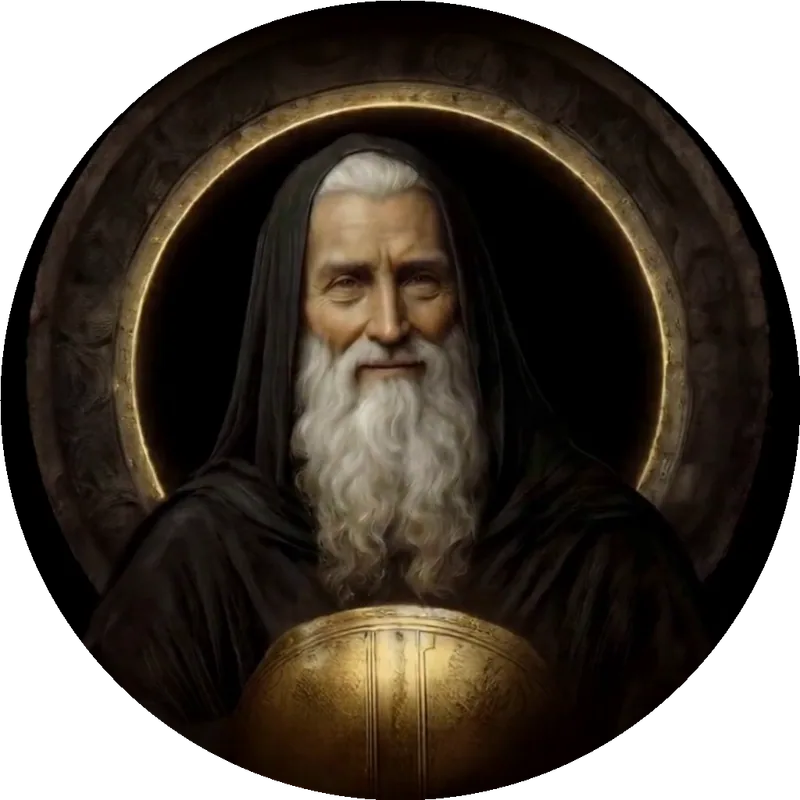
Jehovah — The Eternal Father
Who is God and what is His name? — From Genesis to the Book of Abraham, the scriptures answer plainly.
“Thou shalt worship no other god; for the Lord, whose name is Jehovah, is a jealous God.”
I. The Question: Who Is God and What Is His Name?
Most Christians — and most Latter-day Saints — have inherited assumptions about the identity of God that the scriptures themselves do not support. The honest reader must ask: Who is the God of Genesis? Who is the God of the Book of Mormon? Who did Abraham, Isaac, and Jacob worship? And most urgently: who do we worship, and why? These are not rhetorical questions. The scriptures answer them with startling precision — if we read them in the original language and let them speak without filtering them through institutional tradition.
II. Genesis 1 — Elohim, the Council of Gods, and No Creation Ex Nihilo
The very first word of the Bible hides an explosive teaching. "In the beginning God created the heavens and the earth" is the English rendering. The Hebrew is Beroshit bara Elohim. Elohim is grammatically plural — not "God" but "Gods." Joseph Smith taught this from the Hebrew openly in the King Follett sermon:
“The word Elohim ought to be in the plural all the way through — Gods. The heads of the Gods appointed one God for us; and when you take that view of the subject, it sets one free to see all the beauty, holiness, and perfection of the Gods. In the beginning the head of the Gods called a council of the Gods; and they came together and concocted a plan to create the world and people it.”
The Book of Abraham confirms this from the Lord's own account: "And then the Lord said: Let us go down. And they went down at the beginning, and they, that is the Gods, organized and formed the heavens and the earth" (Abraham 4:1). The Hebrew word bara — rendered "created" in English — does not mean creation from nothing. There is no concept of ex nihilo creation in the Hebrew mind. Bara means to organize, to fashion, to form from existing materials. The Gods of Genesis 1 are not manufacturing from a void — they are organizing intelligences and matter that already exist (Abraham 3:22–24).
The Elohim of Genesis 1 — El Elyon, God Most High — is the head of this divine council. He creates male and female in His image (Genesis 1:27): humanity in the abstract, the pattern of divine personhood impressed upon the race. In the framework of this theology, He is the Grandfather of our covenant — the exalted Being at the apex who presides over the creative assembly. He is not our immediate Father.
III. Genesis 2 — Lord God: A New Name Enters
When Genesis 2 opens, something shifts in the text. The divine name changes. It is no longer simply Elohim — it is now Yahweh Elohim, rendered in the KJV as "the LORD God." LORD in small capitals is the English convention for the divine tetragrammaton YHWH — the personal name, anglicized as Jehovah. This is not a continuation of the same account under a different label. It is the introduction of a new actor in the story.
Genesis 1 gives us the cosmic Elohim — the council of Gods — organizing creation at the grandest scale. Genesis 2 gives us Jehovah, who gets personal: He forms Adam from the dust and breathes into his nostrils the breath of life (Genesis 2:7). He plants the Garden. He walks with man. He makes Eve from Adam's rib — not a race from a pattern, but a particular woman for a particular man in a covenant relationship. Elohim creates male and female. Jehovah makes Adam and Eve. Our God — the God of covenant — is Jehovah.
IV. The Book of Abraham — Jehovah Names Himself
Any remaining doubt about this identification is resolved in Abraham 2. The Lord appears to Abraham and speaks to him directly. He sets the terms of the covenant in verses 7 through 11 — land, seed, priesthood, gospel — and in verse 8 He names Himself without ambiguity:
“My name is Jehovah, and I know the end from the beginning; therefore my hand shall be over thee.”
The God of Abraham is Jehovah. The JST makes the continuity explicit: "And I, Jehovah, appeared unto Abraham, Isaac, and unto Jacob. I am the Lord God Almighty; the Lord Jehovah. And was not my name known unto them?" (JST Exodus 6:3). Jehovah is not a pre-mortal alias later swapped out for Elohim. He is the God of Israel — the covenant God who has had the same name from the beginning and who has never redirected Israel's worship to anyone else.
V. Abraham 3:22–28 — Reading the Pre-Mortal Council Correctly
Abraham 3 records the pre-mortal scene where the Lord shows Abraham the intelligences organized before the world was, including the noble and great ones (v. 22). Working through verses 22–26, Jehovah is the Lord speaking — standing among these rulers, revealing the terms of foreordination. Then comes verse 27, one of the most misread texts in the Restoration canon:
“And the Lord said: Whom shall I send? And one answered like unto the Son of Man: Here am I, send me. And another answered and said: Here am I, send me. And the Lord said: I will send the first.”
The standard LDS reading assigns "the Lord" to Heavenly Father (Elohim), the first respondent to Jesus Christ, and the second to Lucifer — producing the notorious teaching that Jesus and Lucifer are brothers. But follow the text on its own terms. Jehovah is the Lord speaking throughout this chapter. And one answers "like unto the Son of Man." The Son of Man is Jehovah's own title (Moses 6:57; D&C 45:52). So the one who answers is not Jehovah — he is one like unto Jehovah. He bears the likeness of his Father. This is the Son of Jehovah — a distinct being, who will later be identified with the one like unto the Son of Man in the book of Revelation.
The second respondent — "Here am I, send me" — is identified in verse 28 by his subsequent rebellion: Lucifer, the devil. Lucifer is a created being. As Lord God of this creation, Jehovah made all things — including Lucifer (John 1:3; Colossians 1:16). A created being cannot be the brother of his Creator. The "brothers" doctrine, while institutionally widespread, has no ground in the text when Abraham 3 is read in its own logic.
Jehovah created all things. Lucifer is a creature — a fallen spirit of great former glory, but a creation of the Lord who made him. He is not the brother of Jehovah. He is the adversary of Jehovah's children, operating under the authority of the One who made him — subject to His word, cast out by His name.
VI. Who Do We Worship? — The Scriptures Reason It Out
With the identity of Jehovah established, the question of worship resolves itself directly from the text. JST Exodus 34:14 is the clearest command in all of scripture on this point: "Thou shalt worship no other god; for the Lord, whose name is Jehovah, is a jealous God." The Lord — Jehovah — names Himself as the exclusive object of Israel's worship. His name is Jehovah. He tolerates no rival, no substitution, no redirection of devotion.
The standard Latter-day Saint position today is to worship Heavenly Father — meaning Elohim, the God Most High. But the text does not support this. To direct worship to El Elyon above Jehovah is to worship the Grandfather rather than the Father. Jehovah is our Father. He is the God who covenants with us, who walks with us, who was born of Mary, who carries the marks of the nails. The gospel is not an invitation to know an abstract cosmic deity — it is an invitation to know Jehovah personally.
“And this is life eternal, that they might know thee the only true God, and Jesus Christ, whom thou hast sent.”
Here Jesus prays to El Elyon — acknowledging the Father above Him — while identifying Himself as the one sent. Eternal life is knowing both: the One who sends, and the One who is sent. It is Jehovah who was sent into mortality. It is to Jehovah that we pray. As He Himself commanded in 3 Nephi 18:19: "Therefore ye must always pray unto the Father in my name."
VII. The Book of Mormon Declares It Plainly
Nowhere does the institutional church's framework survive contact with the plain text of the Book of Mormon. The Book of Mormon does not hedge or qualify when it comes to the identity of Christ as Father:
“That they must know that Jesus is the Christ, the very eternal Father.”
“He shall be called Jesus Christ, the Son of God, the Father of heaven and earth, the Creator of all things from the beginning.”
“Teach them that redemption cometh through Christ the Lord, who is the very Eternal Father.”
These are not subordinate or carefully hedged statements awaiting doctrinal clarification. They are plain assertions from the Lord's own prophets. Jesus is the very Eternal Father — not a proxy, not a representative acting in the Father's name in some technical legal sense only, but the Father Himself in the flesh. This is why Abinadi died for it.
VIII. Sons and Daughters of Christ — We Take His Name
The covenant implication of this doctrine crystallizes in Mosiah 5. After Benjamin's people are spiritually reborn and covenant with God, they take upon them the name of Christ (Mosiah 5:8). Benjamin's response to this is the doctrine in its sharpest form:
“And now, because of the covenant which ye have made ye shall be called the children of Christ, his sons and his daughters; for behold, this day he hath spiritually begotten you; for ye say that your hearts are changed through faith on his name; therefore, ye are born of him and have become his sons and his daughters.”
We are not the children of an abstract Elohim. We are the sons and daughters of Christ — of Jehovah — spiritually begotten through the new birth of covenant. To be born again is to be born of Him. To be sealed is to be sealed into His family. Our eternal Father is Jesus.
IX. The Pattern — As Above, So Below
The divine hierarchy is structured on the same family principles at every level. El Elyon — the Elohim, God Most High — is the Father of Jehovah. Jehovah in turn has a Son: the one like unto the Son of Man in Abraham 3:27, first sent to mortality as the Comforter, the Holy Ghost — a deeper teaching belonging to its own study. And Jehovah Himself was sent by His Father into mortality as the Only Begotten in the flesh.
“Verily, verily, I say unto you, The Son can do nothing of himself, but what he seeth the Father do: for what things soever he doeth, these also doeth the Son likewise.”
The Son does only what He sees the Father do. This is the eternal family pattern: El Elyon sends Jehovah. Jehovah sends His Son. Each layer mirrors the one above. The family of God is not a theological committee of co-equal abstract persons — it is a living divine lineage, operating on covenant family principles, hierarchically ordered, and moving always toward the same end: the exaltation of souls and the expansion of the family of God.
God's name is Jehovah. He is our Father. He is Jesus Christ. He appeared to Abraham (John 8:56–58), covenanted with Israel at Sinai, was born of Mary, died and rose again, and will return as King of Kings. We worship no other. We pray in no other name. We become the sons and daughters of no other. There is one God, one Lord, one Father — and His name is Jehovah.
| Genesis 1:1 (Heb: Beroshit bara Elohim) | Plural "Gods" — the head God convened the council; bara = organize, not ex nihilo creation |
|---|---|
| Genesis 2:7 | LORD God (Yahweh Elohim = Jehovah) forms Adam — the covenant, personal creation |
| Abraham 2:8 | "My name is Jehovah" — the Lord names Himself to Abraham unambiguously |
| Abraham 3:27 | "One like unto the Son of Man" ≠ Jehovah (who IS the Son of Man); Lucifer is v. 28 |
| JST Exodus 34:14 | "Thou shalt worship no other god; for the Lord, whose name is Jehovah, is a jealous God" |
| JST Exodus 6:3 | Jehovah appeared to Abraham, Isaac, and Jacob as Lord God Almighty |
| John 17:3 | Eternal life = knowing the only true God and Jesus Christ whom He sent |
| 2 Nephi 26:12 | "Jesus is the Christ, the very eternal Father" — plaintext, no qualification |
| Mosiah 3:8 | "The Father of heaven and earth, the Creator of all things from the beginning" |
| Mosiah 16:15 | "Christ the Lord is the very Eternal Father" — Abinadi's testimony, sealed in his death |
| Mosiah 5:7 | We are spiritually begotten as sons and daughters of Christ through covenant |
| John 5:19 | The Son does only what He sees the Father do — the eternal pattern, as above so below |