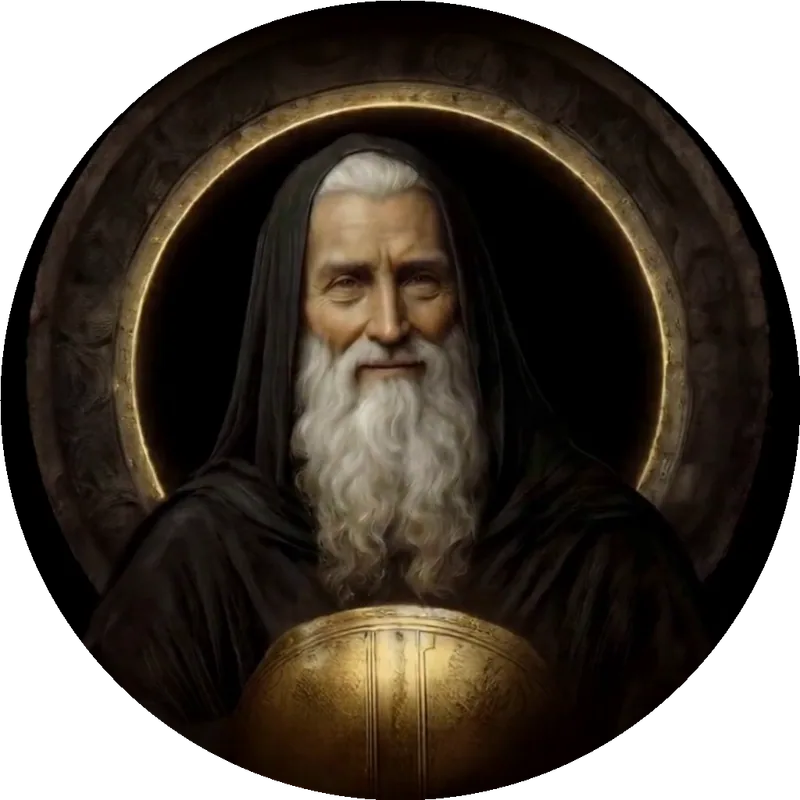
The Name of Christ
Yeshua, Jehovah, Messiah, Christos, Shiloh — the names of the Lord across tongues and their doctrinal weight.
“And thou shalt call his name JESUS: for he shall save his people from their sins.”
I. Why the Names Matter
A name in the biblical world is not a label; it is an identity, an office, and often a mission. The Lord’s names are not interchangeable synonyms. Each name carries a specific load — Yeshua names what He does; Jehovah names who He is; Messiah and Christos name the office He holds; Shiloh names the destiny He fulfills. To know Him rightly is to understand how these names converge on one Person.
The canon makes the stakes explicit:
“Neither is there salvation in any other: for there is none other name under heaven given among men, whereby we must be saved.”
“Wherefore, ye must press forward… and endure to the end. Behold, this is the doctrine of Christ, and there will be no more doctrine given until after he shall manifest himself unto you in the flesh. And when he shall manifest himself unto you in the flesh, the things which he shall say unto you shall ye observe to do.”
II. Yeshua — "Salvation"
The Savior’s given name in Hebrew is Yeshua (Strong’s H3091, a shortened form of Yehoshua). The root is yasha — to save, to deliver, to bring to victory. His name literally means "Jehovah saves" or "salvation of Jehovah." The angel’s instruction to Joseph makes the meaning of the name the reason for the name:
“Thou shalt call his name JESUS: for he shall save his people from their sins.”
The English "Jesus" passes through Greek (Iēsous) and Latin (Iesus) before arriving in English. The same Hebrew name was carried by Joshua son of Nun, who brought Israel into the promised land — a type of the greater Yeshua who would bring His people into the eternal inheritance. Hebrews 4:8–9 makes the typology plain: Joshua could not give the people the true rest; that rest remains for Yeshua the Greater.
III. Jehovah — "I AM"
Jehovah (YHWH, Strong’s H3068) is the personal covenant name revealed at the burning bush: "I AM THAT I AM… Thus shalt thou say unto the children of Israel, I AM hath sent me unto you" [Exodus 3:14]. The tetragrammaton is the verb of being — the self-existent, eternal, uncaused Reality who nevertheless condescends to covenant with a particular people. Jesus claims this name as His own:
“Jesus said unto them, Verily, verily, I say unto you, Before Abraham was, I am. Then took they up stones to cast at him.”
The Jews took up stones because they understood exactly what He had said: He had named Himself by the Exodus 3 name. He is Jehovah. 3 Nephi 15:5 and 3 Nephi 20:43–46 repeat the identification. Abraham 2:8 has Jehovah name Himself to Abraham unambiguously: "My name is Jehovah, and I know the end from the beginning." The God of the Old Testament and the Christ of the New Testament are the same Person in two phases of the same mission.
IV. Messiah / Christos — "The Anointed One"
Messiah (Hebrew mashiach, Strong’s H4899) and Christos (Greek, Strong’s G5547) are the same word in two languages: the Anointed One. The anointing is the Old Testament rite by which a man was set apart to a sacred office — prophet, priest, or king [1 Samuel 10:1; 16:13; Exodus 29:7]. Messiah names the office: the single Anointed One who is simultaneously Prophet (Deuteronomy 18:15), Priest (Psalm 110:4; Hebrews 7), and King (Psalm 2; Revelation 19:16).
John 1:41 preserves both names in one verse: "He first findeth his own brother Simon, and saith unto him, We have found the Messias, which is, being interpreted, the Christ." Messiah = Christ. The two words carry identical meaning; the difference is only the language of the speaker. When a Jew said Mashiach, and a Greek said Christos, they named the same office and the same Person.
V. Shiloh — The One to Whom It Belongs
In Jacob’s dying blessing on Judah, a strange and load-bearing name appears:
“The sceptre shall not depart from Judah, nor a lawgiver from between his feet, until Shiloh come; and unto him shall the gathering of the people be.”
Shiloh is a name — and reads most naturally as "he to whom it belongs" or "the peaceful one" (from shalah, to be tranquil, or from shelloh, "that which is his"). Either etymology lands on Christ: He is the One to whom the scepter rightly belongs; He is also the Prince of Peace [Isaiah 9:6]. Genesis 49:10 is a specifically Messianic prophecy tying the royal line of Judah to a future figure whose coming is the hinge point of Israel’s history. The New Testament identifies Him: "The Lion of the tribe of Juda, the Root of David, hath prevailed" [Revelation 5:5].
VI. Hebrews 7 — Priest After the Order of Melchizedek
Hebrews 7 ties one more name to Christ: Melchizedek, "king of righteousness" and "king of Salem, which is, King of peace" [Hebrews 7:1–2]. Christ is not Melchizedek in personal identity, but He is priest forever "after the order of Melchizedek" — that is, after the same order of priesthood that Melchizedek held [Psalm 110:4; Hebrews 7:17, 21, 24].
“But this man, because he continueth ever, hath an unchangeable priesthood. Wherefore he is able also to save them to the uttermost that come unto God by him, seeing he ever liveth to make intercession for them.”
The true name of the priesthood is "the Holy Priesthood, after the Order of the Son of God" [D&C 107:3–4]. "Melchizedek Priesthood" is a reverential circumlocution so the name of the Son of God is not too frequently repeated. Every time the name "Melchizedek" is used for priesthood, it points back to Christ, whose name the priesthood actually bears.
VII. Taking the Name of Christ — Baptism and Covenant
The names converge in the baptismal covenant. The candidate is baptized in the name of Jesus Christ (Yeshua ha-Mashiach) — and in that act takes the name upon himself [Mosiah 5:8–12; 3 Nephi 27:5–8].
“And how be it my church save it be called in my name? For if a church be called in Moses’ name then it be Moses’ church; or if it be called in the name of a man then it be the church of a man; but if it be called in my name then it is my church, if it so be that they are built upon my gospel.”
“And now, because of the covenant which ye have made ye shall be called the children of Christ… And under this head ye are made free, and there is no other head whereby ye can be made free. There is no other name given whereby salvation cometh; therefore, I would that ye should take upon you the name of Christ, all you that have entered into the covenant with God that ye should be obedient unto the end of your lives.”
To take His name is to stand under His headship, to be numbered with His seed, to be known in heaven by His family name. "There is no other name whereby salvation cometh." Yeshua is the salvation, Jehovah is the I AM, Messiah is the anointed office, Shiloh is the destiny, Melchizedek names the priestly order — and all of it converges on the one Person who calls His covenant-keepers to be called by His name.
| Matthew 1:21 | Yeshua — "he shall save his people from their sins" |
|---|---|
| Exodus 3:14–15 | Jehovah (YHWH) — I AM THAT I AM; the name forever |
| John 8:58–59 | Jesus claims the Exodus 3 name — "Before Abraham was, I am" |
| Abraham 2:8 | Jehovah names Himself to Abraham — "My name is Jehovah" |
| John 1:41 | Messias = Christos — same name in two languages |
| Psalm 2:2, 7 | The Anointed One of the Lord — enthroned as King |
| Genesis 49:10 | Shiloh — he to whom the gathering of the people belongs |
| Hebrews 7:17, 24–25 | Priest forever after the order of Melchizedek — unchangeable |
| D&C 107:3–4 | True name is the Holy Priesthood after the Order of the Son of God |
| 3 Nephi 27:5–8 | The church is called in Christ’s name; taking His name upon us |
| Mosiah 5:7–8 | Covenant people become children of Christ — take His name |