Who Is the Holy Ghost?
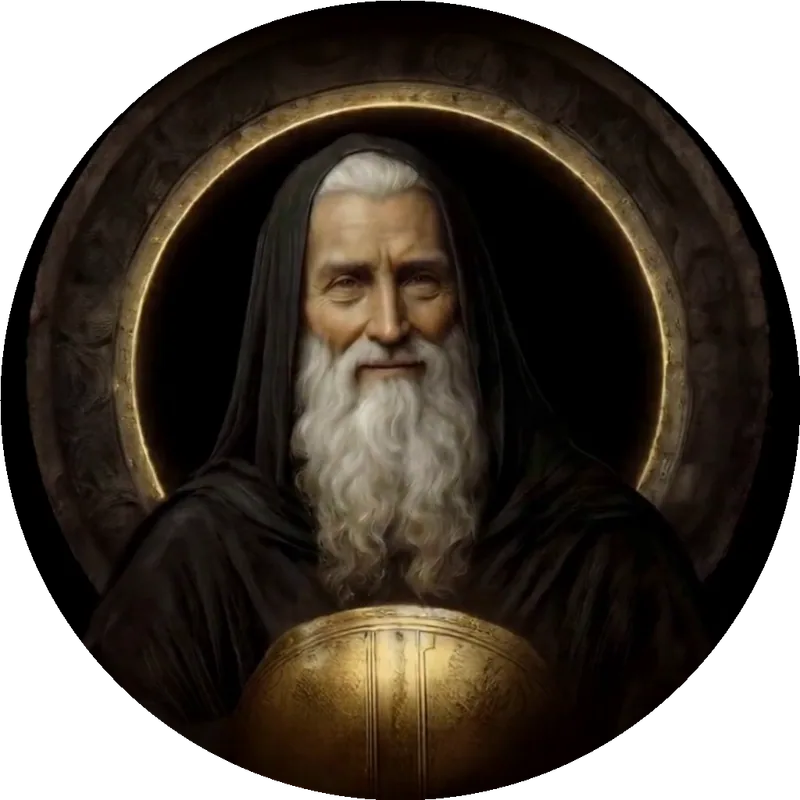
"One like unto the Son of Man" — the personage of spirit, the third member of the Godhead, and the Comforter sent in Christ’s name.
“The Holy Ghost has not a body of flesh and bones, but is a personage of Spirit. Were it not so, the Holy Ghost could not dwell in us.”
I. A Personage, Not a Force
The first thing the Restoration settles about the Holy Ghost is His personhood. He is not a vague influence, not a cosmic vibration, not a shorthand for the mood of a meeting. He is a Personage [D&C 130:22] — a specific being with intellect, will, and voice, capable of being grieved [Ephesians 4:30], capable of speaking in particular words at particular times [2 Nephi 32:5], capable of bearing witness [John 15:26]. The vague Trinitarian fog that surrounds the third member in creedal Christianity does not survive contact with plain scripture.
At the same time He is distinct from the Father and the Son. He proceeds from the Father, is sent in the Son’s name, and testifies of the Son [John 14:26; John 15:26]. Three Personages, one in will and testimony — this is the Godhead the Restoration names.
II. A Personage of Spirit — What That Means
D&C 130:22 teaches that the Holy Ghost is "a personage of Spirit" — without a body of flesh and bones in this dispensation — and that without that condition He could not dwell in us. A body of flesh fills a particular place at a particular time. A personage of spirit can indwell the servants of God simultaneously across the earth. The condition of His being is precisely what lets Him minister the gift of the Holy Ghost to every covenant-keeper who receives Him.
This is not a statement that He has no form. Joseph Smith taught that "that which is without body, parts, and passions is nothing" [TPJS p. 181]. Spirit, in the Restoration, is refined matter [D&C 131:7–8]. The Holy Ghost has a spirit body — a form, a visage, a likeness — but not yet the tabernacle of flesh.
“There is no such thing as immaterial matter. All spirit is matter, but it is more fine or pure, and can only be discerned by purer eyes.”
III. One Like Unto the Son of Man — Abraham 3 and the Ancient Pattern
Abraham 3:27 preserves a pre-mortal council scene in which the Lord asks, "Whom shall I send?" and receives two answers:
“And one answered like unto the Son of Man: Here am I, send me. And another answered and said: Here am I, send me. And the Lord said: I will send the first.”
The one who answers "like unto the Son of Man" is not the Son of Man Himself — He is like unto Him. He bears the likeness and image of Jehovah. He is the firstborn among those chosen to minister in this dispensation under the Father. Reading Abraham 3 in the light of Moses 6:57 and 1 Nephi 11, the figure who answers first, like unto the Son of Man, is the one who would serve as the Comforter sent in the Son’s name — the Holy Ghost of this creation.
The implication is staggering: the third member of the Godhead is not a nameless spirit-force but a specific person, foreordained before the foundation of the world, whose likeness is patterned on Jehovah Himself. He is the Son of the Son in one application of the pattern — the one called to minister the sanctifying power of Christ to the covenant people until Christ Himself returns.
IV. The Comforter Sent in the Name of the Son
Jesus’ teaching about the Comforter in John 14–16 is the clearest gospel portrait of the Holy Ghost’s office:
- "I will pray the Father, and he shall give you another Comforter, that he may abide with you for ever" [John 14:16]
- "He shall teach you all things, and bring all things to your remembrance, whatsoever I have said unto you" [John 14:26]
- "He shall testify of me" [John 15:26]
- "He will guide you into all truth… and he will shew you things to come" [John 16:13]
- "He shall glorify me: for he shall receive of mine, and shall shew it unto you" [John 16:14]
The Comforter’s mission is Christ-centered end-to-end. He teaches what Christ taught, brings Christ’s words back to remembrance, testifies of Christ, shows what Christ reveals, and glorifies Christ. He does not compete with the Son; He is the one sent to make the Son known.
This is why the Book of Mormon says the Holy Ghost "witnesseth of the Father and of the Son" [2 Nephi 31:18] and is the means by which the saints "may know the truth of all things" [Moroni 10:5]. Every confirmation of truth in the covenant life comes through this Personage.
V. Sanctification — What the Holy Ghost Actually Does
Beyond teaching and testifying, the Holy Ghost sanctifies. He is the agent of the mighty change of heart [Mosiah 5:2–7], the seal of the Holy Spirit of Promise on valid ordinances and covenants [D&C 132:7, 19], and the refining fire by which flesh is burned clean of the carnal man [3 Nephi 9:20; Malachi 3:2–3].
“And then cometh a remission of your sins by fire and by the Holy Ghost; and then can ye speak with the tongue of angels, and shout praises unto the Holy One of Israel.”
Baptism by water is only half the ordinance. Baptism by fire and the Holy Ghost is the other half — and it is this second baptism, administered by the Personage of Spirit, that actually changes a soul. Water is the sign; fire is the substance.
The gift of the Holy Ghost — conferred by the laying on of hands — is not a certificate of membership. It is a covenant right to the companionship of a divine Personage. The gift is only as operative as the covenant-keeping that invites His presence. Grieve Him through unrepented sin and He withdraws; honor Him and He abides.
VI. The Joseph Smith Translation and the Clarifying of Old Texts
Joseph Smith’s inspired revisions repeatedly clarify Holy Ghost texts. JST John 1:18 reinforces that no man has seen the Father except those to whom the Son reveals Him. JST 1 John 4:12 teaches the same. The Restoration’s pattern is that the Spirit reveals the Son, the Son reveals the Father, and the Father receives the son by the power of the Holy Ghost — an ascending chain of revelation and a descending chain of power.
The Holy Ghost is not a rival to Christ and not a lesser echo of the Father. He is the one sent to bring the covenant-keeper to both — the guide up the ladder, the seal of the oath, the witness in the heart.
| D&C 130:22 | The Holy Ghost is a personage of Spirit — distinct from Father and Son |
|---|---|
| D&C 131:7–8 | All spirit is matter; spirit is refined, not immaterial |
| John 14:16, 14:26 | The Comforter is "another" sent by the Father in the Son’s name |
| John 15:26 | The Spirit of truth proceeds from the Father and testifies of the Son |
| John 16:13–14 | Guides into all truth; shows things to come; glorifies the Son |
| Abraham 3:27 | "One like unto the Son of Man" — foreordained before the foundation of the world |
| Abraham 4:5 | The Spirit of the Gods moves upon the face of the waters — active in creation |
| 2 Nephi 31:13, 18 | Baptism of fire and the Holy Ghost; witness of Father and Son |
| Moroni 10:4–5 | The Holy Ghost as the revelator of truth of all things |
| D&C 132:7, 19 | Seal of the Holy Spirit of Promise on valid covenants |